
Small Steps, Big Opportunities
Sophomore year is an opportunity to build on freshman-year experiences and make more informed choices about what comes next. Students enter tenth grade with different levels of confidence, and some are still developing their routines or discovering their interests.


Note from our Founder
You don't need a packed schedule or a perfect plan to be making meaningful progress. This is a year to explore and stretch yourself at a manageable pace: take classes that challenge you, become more involved in activities you care about, or help lead a project. Start with something that interests you, and give yourself room to discover where it takes you.
— Keith Wilkerson, CEO and Founder
This Year's Priorities
Encourage your student to consider these four areas in order to identify practical next steps and make the most of their sophomore year.
Course Selection
Students should be considering courses that provide an appropriate challenge and reflect their readiness, interests, and the options available at their school.
- Before your school's course-selection deadline, review graduation requirements, prerequisites, and available classes with your school counselor.
- Ask current teachers where they think you are ready for a greater challenge, including honors, AP, or other advanced courses. What preparation or support would help you succeed?
- Consider the workload across your whole schedule, including activities, work, and family responsibilities. Choose courses that leave realistic time for studying and rest.
Deepen Involvement and Take Initiative
As interests develop, students can focus more time on activities they enjoy and find ways to contribute.
- Review your current commitments. Which activities feel meaningful? Where would you like to contribute more? Which commitments leave you stretched too thin?
- Ask a club leader, coach, or supervisor where extra help is needed. Consider proposing a fundraiser, welcoming new members, or supporting an existing project.
- Choose one contribution and consider what your role is and what the timeline looks like. Adjust other commitments if needed so you can follow through while maintaining your schoolwork.
Understand Testing and Plan Next Steps
This is the time to start learning about the different exams and identifying where preparation would be useful.
- Ask which tests your school offers and when. If you have PSAT or PreACT results, review them to identify your strengths and areas to practice.
- Take a full-length practice SAT and ACT using current official materials. Follow the provided instructions and timing, using appropriate accommodations when applicable.
- Compare your results and experiences with a counselor or advisor. Which exam's pacing and question types felt more manageable?
- Begin working on skills that need to be strengthened and discuss a testing timeline that allows time for preparation alongside coursework and other commitments.
Explore Opportunities Beyond the Classroom
The summer after sophomore year can offer time to explore an interest, build a skill, or take on a responsibility.
- Choose a summer goal and compare options such as a program, job, volunteering, or independent project. What would you like to learn or accomplish?
- Consider costs, financial assistance, transportation, dates, and family responsibilities. Make sure your plan also leaves time for rest.
- Check deadlines early and record required application materials. Aim to settle on a summer plan before the school year ends and determine backups just in case.
Free Quick Guide
Ready to Put These Priorities Into Action?
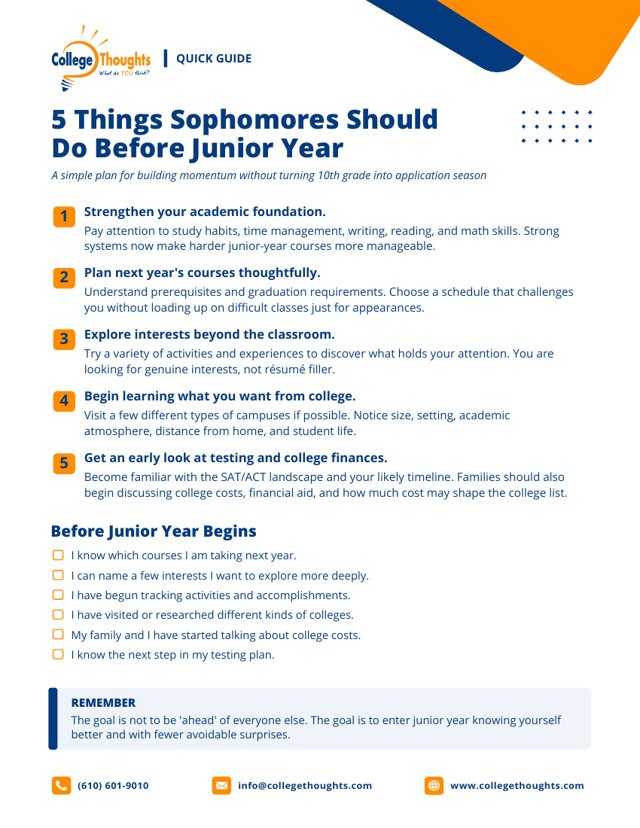
Sophomore year is when students should start to build momentum, and there are a few things that we recommend students do before starting junior year. Click below to claim your copy!
5 Things Sophomores Should Do Before Junior Year
How We Help 10th Graders
The CollegeThoughts Approach
Ready to make the most of sophomore year? Contact us!
At CollegeThoughts, we help sophomores turn these decisions into a manageable plan for the current and following year.
Our advisors review course options and help students choose a challenging but manageable schedule. We use PSAT and practice-test results to guide preparation, introduce test-taking strategies, and develop a testing timeline that accounts for coursework and other commitments. We also help students evaluate their commitments and identify ways to take a more active role in activities they enjoy. For a student who feels stretched across several clubs, our advisors help them identify which clubs to prioritize and how to demonstrate leadership by taking initiative and supporting others. We recommend summer opportunities that fit students' goals and circumstances and provide support with program applications.
Overall, we provide families with personalized guidance and clear steps they can take now to help their students approach junior year with greater confidence, clearer priorities, and practical tools to move forward.
Questions From Families
Frequently Asked Questions
Not at all. Sophomore year is an ideal time to explore interests, strengths, and possible career paths without committing to one direction. Encourage your student to explore different subjects, speak with people in fields that interest them, and consider job-shadowing or summer experiences when available. Exploration now can help inform future college research.
Summer can be a valuable time for students to explore interests, gain experience, and develop independence. However, expensive pre-college programs are not required for college admission. A part-time job, community service, a personal project, local internship, summer course, or meaningful time spent developing a skill can all be worthwhile. Choose opportunities based on your student's interests and your family's resources.
Focus on a few priorities at a time: academic progress, thoughtful course selection, extracurricular exploration, and gradual college and career discovery. Have regular conversations about goals and challenges, help your student access resources when needed, and encourage them to take ownership of their decisions. A manageable plan works better than treating every activity as a high-stakes college application requirement.
Explore Other Years